Melanotan 2 effects: the clinical reports
An effect can be wanted, uncomfortable or dangerous. The same broad activity can put it in more than one category.
Nausea and food avoidance
Nausea sits awkwardly beside the appetite claims. The small human pigmentation study recorded it, and researchers analysing online discussions found nausea and flushing among the recurring concerns.
Animal experiments complicate the explanation. The 2022 nucleus-accumbens mouse study reduced food-seeking without conditioned taste aversion. An older rat experiment did produce conditioned taste aversion alongside reduced eating. I cannot infer comfortable appetite suppression from a taste-aversion test in mice. Species, intervention and experimental setting matter here.
Experiences outside trials
People describe a deeper tan, less appetite, increased sexual interest, flushing, fatigue, stretching and yawning. Some welcome the appetite or sexual effects; others describe them as intrusive. Injection-site redness, itching and small lumps also occur in user accounts. These reports are anecdotal, with no controlled clinical evidence establishing their frequency or predictability.
The single-user case examination is especially uncomfortable: perceived confidence and attractiveness coexisted with awareness of an unlicensed, potentially contaminated product and a reported sense of tolerance and dependence. I see a preference becoming harder to reconsider there, rather than a simple tally of pleasant and unpleasant effects.
Moles under closer examination
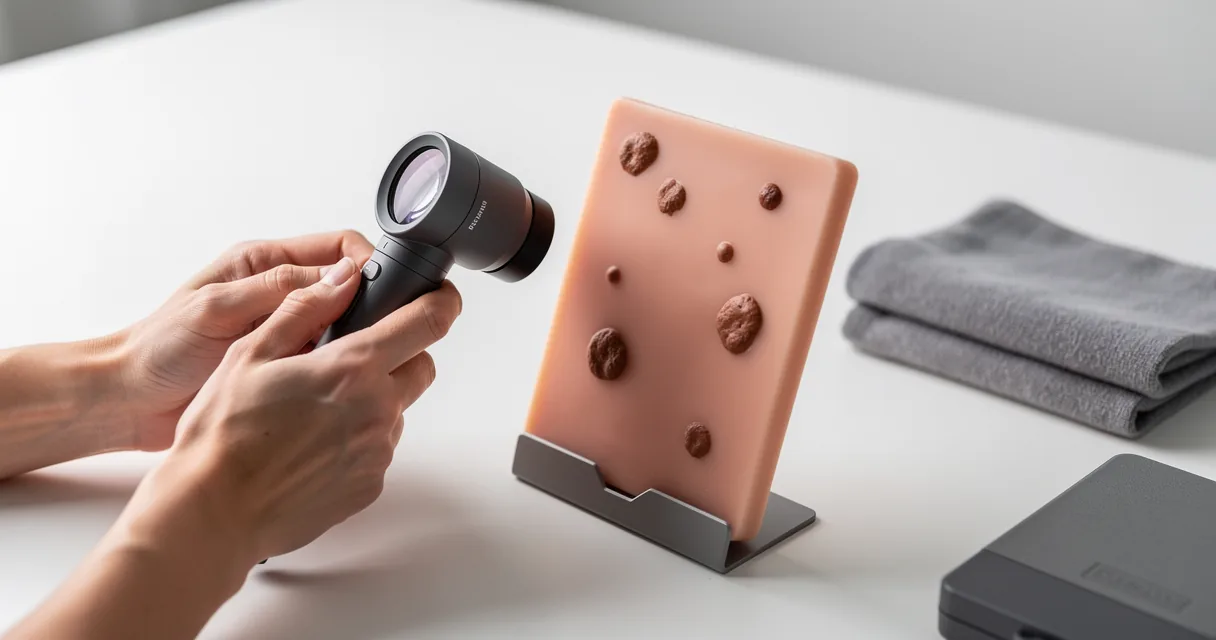
Eruptive dysplastic nevi are newly appearing moles with abnormal features on tissue examination. Reports also describe darkening and changes visible through dermoscopy, the close inspection of skin with a handheld optical instrument. Melanoma and melanoma in situ have been reported in association with melanotan use.
The association deserves seriousness; these reports cannot establish how often melanoma occurs because of the drug. Stimulating pigment cells while leaving risk unquantified is an uneasy combination, to my mind. A new or changing mole warrants prompt dermatological assessment.
Melanotan 2 reviews and Reddit
Searching Melanotan 2 reviews or Melanotan 2 Reddit turns up accounts of satisfaction as well as worry about moles, nausea and uneven colour. Those accounts are anecdotal reports, not clinical evidence. A pleased account supplies no denominator for harm and no reliable statement about the contents of the preparation.
A social-media analysis of melanotan marketing examined the gap between online presentation and documented safety concerns. The all-purpose verdict is where enthusiasm loses me. Satisfaction can be sincere while leaving almost every difficult safety question open.
Why can't anyone promise Melanotan 2 is safe?
<a id="safety-cautions"></a>The honest answer to whether Melanotan 2 is safe is that no one knows its long-term safety, because it never finished human testing — and the published case reports describe real, sometimes serious harms. Here is what the literature documents.
New, changing, or darkening moles, and melanoma risk. Because it drives pigment cells throughout the skin, case reports describe eruptive new moles, atypical (dysplastic) moles, and darkening of existing ones after use (Cardones 2009; eruptive nevi reports) [9][16][17][18]. Dermoscopy studies show measurable changes in moles during use [19], and several reports document melanoma and melanoma in situ in melanotan users [21][22][23]. The long-term cancer risk is not established, but it is a serious concern, especially alongside sun or sunbed use. Any new or changing mole warrants prompt dermatological assessment.
Prescription peptide care at Promise Peptides (mypromise.com) depends on a clinician's decision. Each case goes before a clinician licensed in the U.S., who can decline to prescribe. Only patients in the United States are seen, with their state's rules and the requested treatment setting the choices. The compounded medicine has no FDA approval, and the safety findings here still matter. Research-labelled vials are still sold online; they do not become prescribed care merely because another route exists.
Rhabdomyolysis and kidney injury. A published case links a Melanotan 2 injection to severe muscle breakdown (rhabdomyolysis) [24], and a separate case and literature review describe renal infarction — a blocked blood supply to the kidney — associated with its use (Peters 2020) [2]. The mechanisms are not fully understood and may relate to the peptide's effects on blood vessels.
Priapism (prolonged, painful erection). Because it promotes erections, several case reports describe priapism — a prolonged, painful erection unrelated to arousal — after melanotan injections, including after apparent overdose [25][26][27]. Priapism is a urological emergency that can permanently damage erectile tissue if not treated quickly.
Other Melanotan 2 dangers
A case report associated melanotan with posterior reversible encephalopathy syndrome, a condition involving brain swelling that can present with headache, seizures, visual disturbance and high blood pressure. “Reversible” in that name offers no reason to wait through an emergency. A sudden severe headache or seizure calls for urgent medical care.
Systemic experiments in mice found increased blood pressure and heart rate. Rat work with impaired nitric oxide signalling found an amplified pressure response. These are animal findings; the cardiovascular risk in humans remains poorly characterised.
Product contents
An analysis of online melanotan II preparations found inaccurate quantity claims and unidentified impurities. A later forensic study identified melanotan II and bremelanotide in seized black-market samples. The latter establishes what the analysts identified in those samples; it supplies no general certificate of purity or sterility.
I regard the contents question as an additional uncertainty on top of the pharmacology. Even a carefully described effect in a study says little about an unknown preparation. The regulatory answer distinguishes the lack of approval from individual prescription decisions.